Luxor: The World's Greatest Open-Air Museum

Luxor Sights & Attractions: Explore the World's Greatest Open-Air Museum

Known in antiquity as Thebes (Waset), Luxor was the imperial capital of Egypt during the New Kingdom (c. 1550–1070 BCE). Divided by the Nile River into the East Bank (the realm of the living, dedicated to royal palaces and temples of divine worship) and the West Bank (the realm of the dead, dedicated to royal mortuary temples and rock-cut tombs), Luxor holds the dense concentration of ancient Egyptian monumental architecture.

Karnak Temple Complex

Karnak Temple Complex

The largest religious complex ever constructed by ancient civilization, developed over a span of more than 1,500 years by dozens of successive pharaohs in honor of the Theban Triad (Amun-Ra, Mut, and Khonsu).

The Great Hypostyle Hall: A forest of 134 massive sandstone columns rising up to 21 meters high, decorated with bas-reliefs from the reigns of Seti I and Ramesses II.

The Sacred Lake & Great Scarab: An artificial reservoir used by high priests for purification rituals, flanked by the granite scarab statue of Khepri.

Obelisks of Hatshepsut and Thutmose I: Monolithic red granite spires quarried in Aswan that have stood intact for over three millennia.
Luxor Temple

Luxor Temple

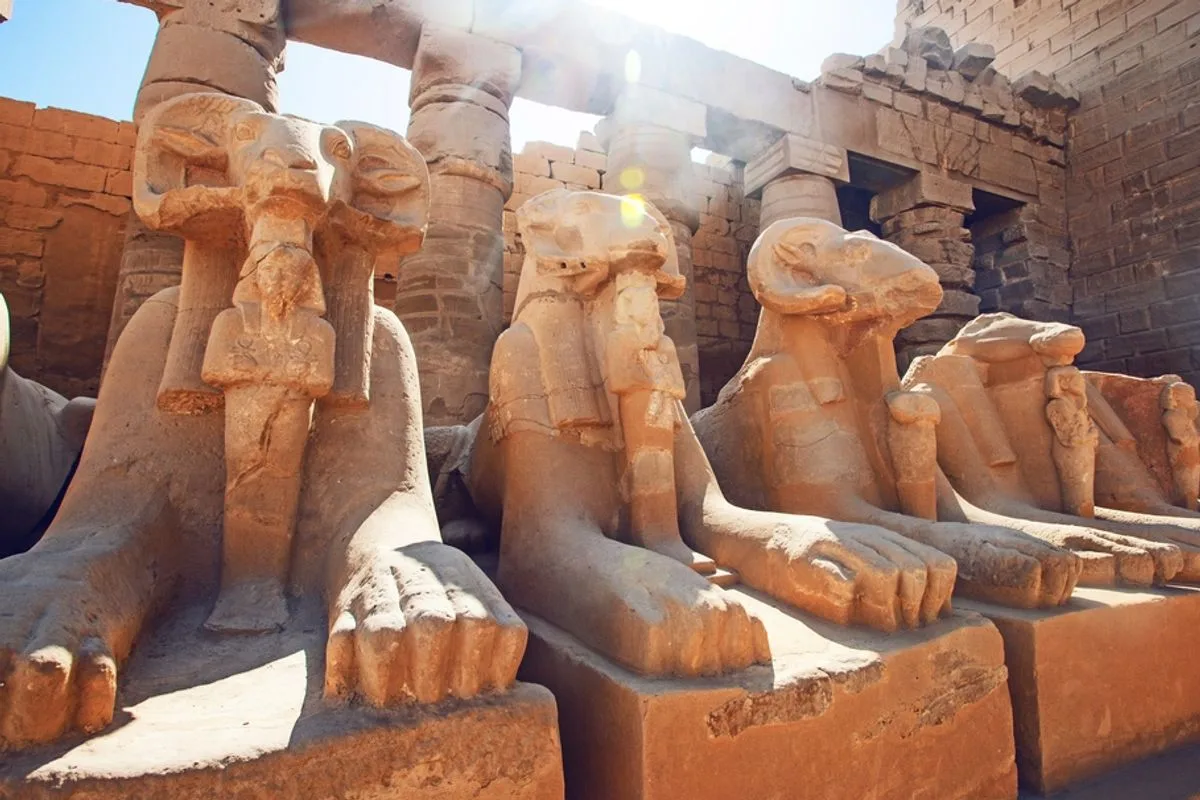
Located in the center of modern Luxor and connected to Karnak by the Avenue of Sphinxes (Dromos), a 2.7-kilometer stone-paved ceremonial causeway lined with over 1,000 human- and ram-headed sphinx statues.

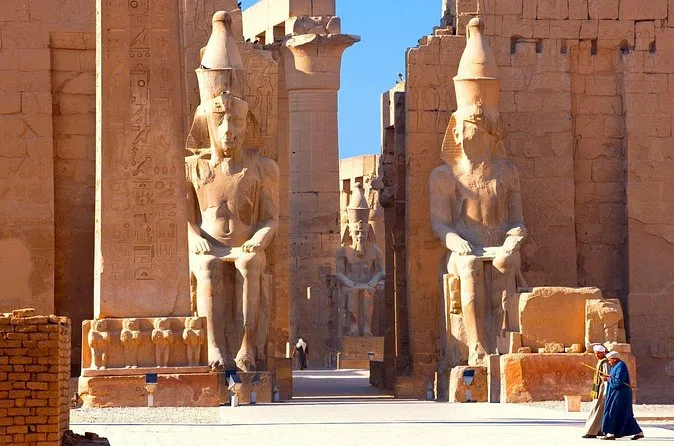
Pylon of Ramesses II: Fronted by massive seated colossi and a red granite obelisk (its twin stands at the Place de la Concorde in Paris).

Court of Amenhotep III & Hypostyle Hall: Notable for its papyrus-bundle columns and night lighting, making it one of Egypt's few temples open for evening visits.

Valley of the Kings

Valley of the Kings (Wadi el-Muluk)

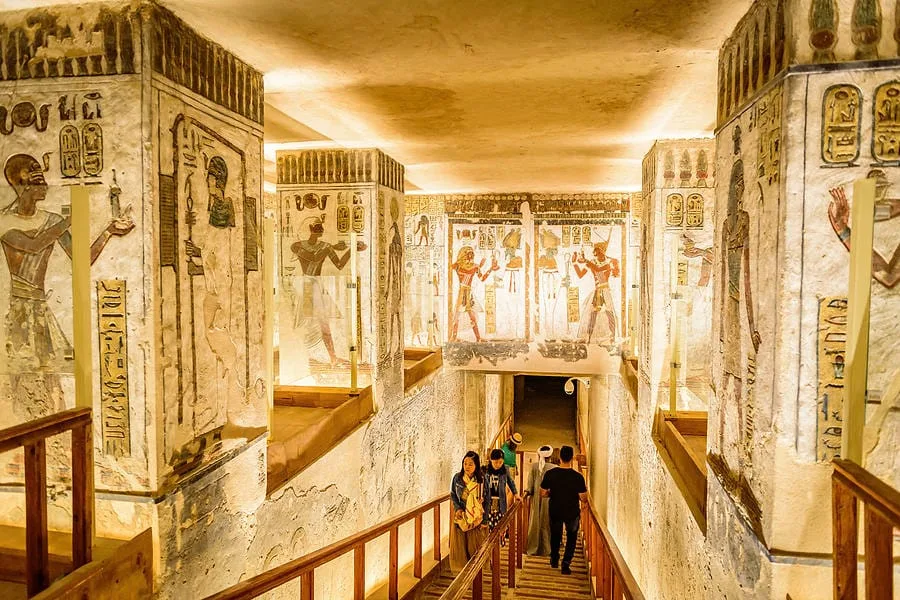
A hidden limestone gorge beneath the pyramid-shaped peak of al-Qurn, housing more than 60 rock-cut royal tombs constructed during the Eighteenth, Nineteenth, and Twentieth Dynasties.

Tomb Art & Preservation: Walls covered with intact, colorful funerary literature including the Book of the Dead, the Amduat, and the Book of Gates.

Key Tombs: KV62 (Tutankhamun), KV9 (Ramesses V/VI), KV17 (Seti I—renowned for its deep corridors and painted reliefs), and KV11 (Ramesses III).

Temple of Hatshepsut at Deir el-Bahari

A masterwork of classical ancient architecture designed by royal architect Senenmut. Rising in three tiered limestone terraces against the cliffs of the Theban mountain range, it honors Egypt’s celebrated female pharaoh.

Punt Reliefs: Detailed wall carvings recording Hatshepsut's maritime trade expedition to the exotic Land of Punt (modern-day Horn of Africa).

Birth Colonnade & Chapel of Anubis: Scenes asserting Hatshepsut’s divine heritage and sacred patron deities.

valley of the queen

Valley of the Queens & The Colossi of Memnon

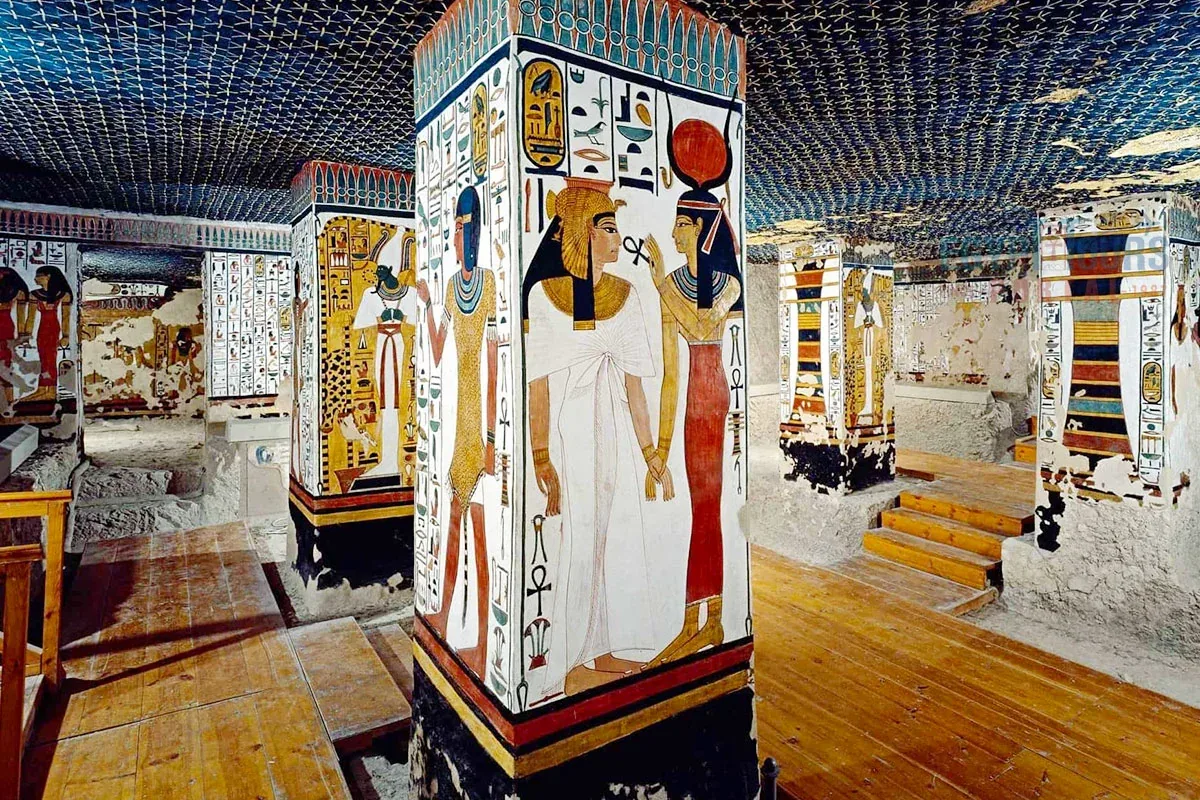
Tomb of Queen Nefertari (QV66): Located in the Valley of the Queens, recognized as one of Egypt's finest preserved artistic monuments, featuring vivid plaster paintings depicting Ramesses II's royal wife.

Colossi of Memnon: Two 18-meter-tall twin stone statues of Pharaoh Amenhotep III that originally stood sentinel before his now-ruined mortuary temple.

Medinet Habu: The mortuary temple of Ramesses III, famed for its deep-cut military relief carvings and preserved painted ceilings

Karnak Temple East Bank 06:00 AM – 05:00 PM 2.5 – 3.5 hours

Luxor Temple East Bank 06:00 AM – 08:00 PM (open at night) 1.5 – 2 hours

Valley of the Kings West Bank 06:00 AM – 05:00 PM 2 – 3 hours

Temple of Hatshepsut West Bank 06:00 AM – 05:00 PM 1.5 hours

Medinet Habu West Bank 06:00 AM – 05:00 PM 1 – 1.5 hour

The East Bank is home to the two most prominent divine temple complexes in Luxor:

Karnak Temple Complex: The largest religious complex ever built, featuring the Great Hypostyle Hall, the Sacred Lake, and massive granite obelisks.

Luxor Temple: Located in the city center, known for its colossal statues of Ramesses II, grand peristyle courts, and night illumination.

The Avenue of Sphinxes (Dromos): The restored 2.7-kilometer ceremonial avenue connecting Karnak and Luxor temples.

Luxor Museum: Houses a curated collection of masterworks found in Theban temples and tombs, including royal mummies and statues discovered in the Luxor Temple cachette.

Yes, visitors can walk along parts of the fully excavated and paved Avenue of Sphinxes. However, because the distance is 2.7 kilometers (approximately 1.7 miles) under open sun, most travelers prefer to tour Karnak first, take a short 5-minute taxi or carriage ride to Luxor Temple, and explore the avenue's entrance gateways directly from either temple.

Karnak Temple: Best visited early in the morning (06:00 AM – 08:30 AM) to beat both the heat and large tour bus groups, or during the late afternoon when the sun angles through the massive columns of the Hypostyle Hall.

Luxor Temple: Best visited in the late afternoon just before sunset and into the evening. Luxor Temple remains open until 08:00 PM and is fully illuminated at night, offering an entirely different atmospheric experience.

Yes. The Karnak Sound and Light Show runs nightly with performances presented in various languages (English, French, German, Spanish, etc.). The show features an illuminated walking tour through the temple grounds narrating the history of Thebes and the pharaohs who built Karnak.

Yes. A typical full-day Luxor tour starts early on the West Bank (Valley of the Kings, Hatshepsut Temple, Colossi of Memnon) from 06:30 AM to around 12:30 PM, breaks for lunch, and finishes on the East Bank (Karnak in the mid-afternoon and Luxor Temple around sunset/evening).