Sights & Attractions Alexandria

Alexandria Sights & Attractions: Explore Egypt's Mediterranean Jewel

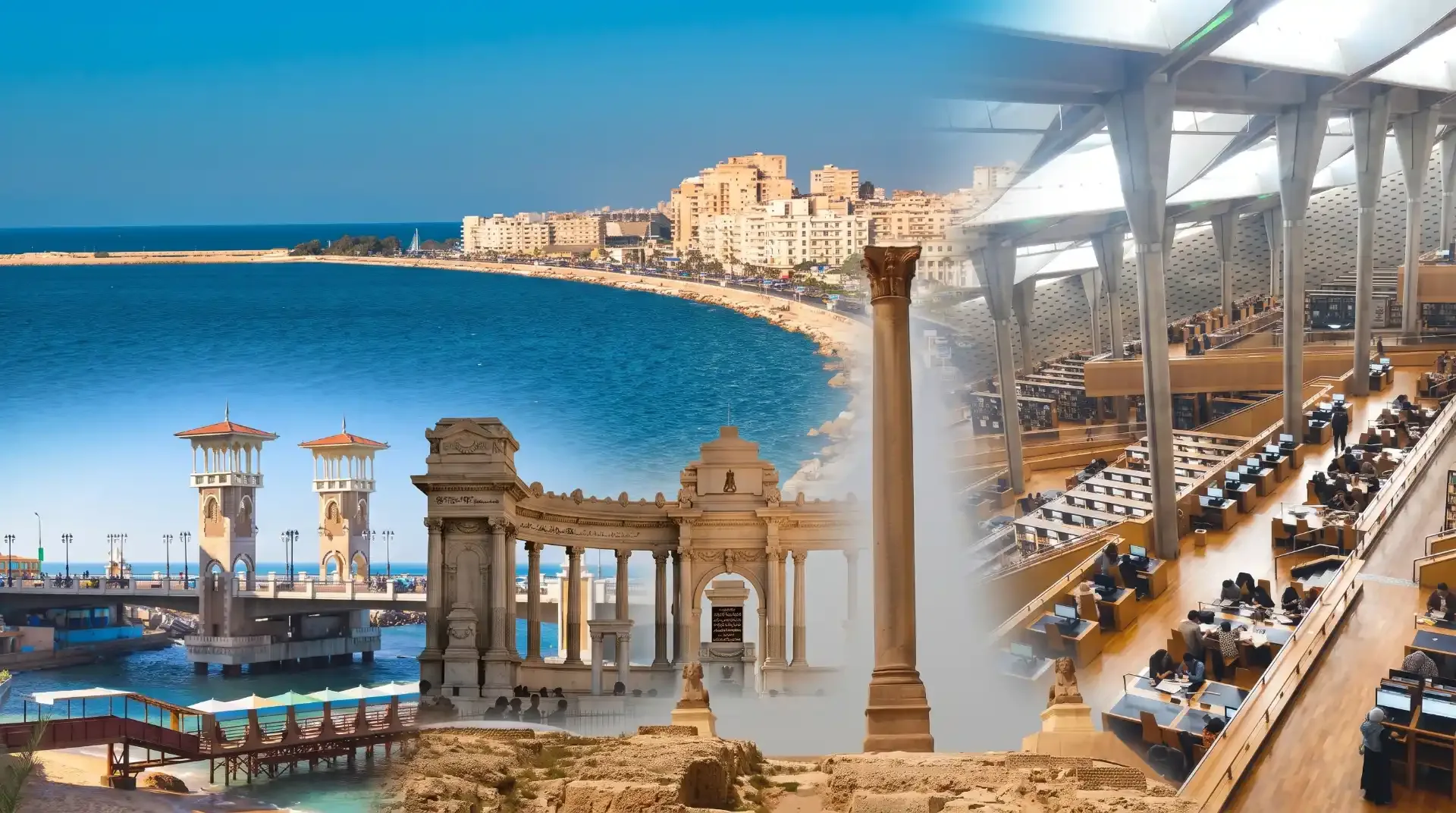
Alexandria: The Pearl of the Mediterranean

Founded in 331 BCE by Alexander the Great, Alexandria served as the cosmopolitan capital of Egypt for nearly a millennium. Unlike the pharaonic temple landscapes of Luxor and Aswan, Alexandria blends classical Greco-Roman antiquity, maritime fortress history, and early 20th-century European Mediterranean charm.

The Citadel of Qaitbay

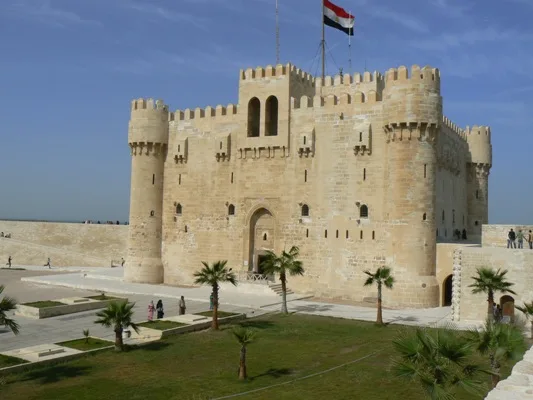
The Citadel of Qaitbay: Fortress on the Ancient Pharos

Perched on the northern tip of the eastern harbor, the Citadel of Qaitbay is a 15th-century maritime stronghold built directly over the foundations of the collapsed Pharos Lighthouse—one of the Seven Wonders of the Ancient World.

Historical Significance: Commissioned in 1477 CE by Mamluk Sultan Al-Ashraf Qaitbay, the fortress was designed to defend Egypt against naval assaults from the expanding Ottoman Empire. The sultan reused the massive fallen red granite and limestone masonry from the destroyed ancient lighthouse to erect its outer walls and main keep.

Architecture: The complex features a heavily fortified exterior curtain wall with square defense bastions, an inner keep rising across three levels, arrow slits, and the oldest functioning mosque in Alexandria.

Visitor Experience: Elevated stone ramparts offer panoramic, 360-degree views looking across the open Mediterranean Sea on one side and the curved yacht harbor of Alexandria's Corniche on the other.
Bibliotheca Alexandrina

Bibliotheca Alexandrina: Revival of the Ancient Library

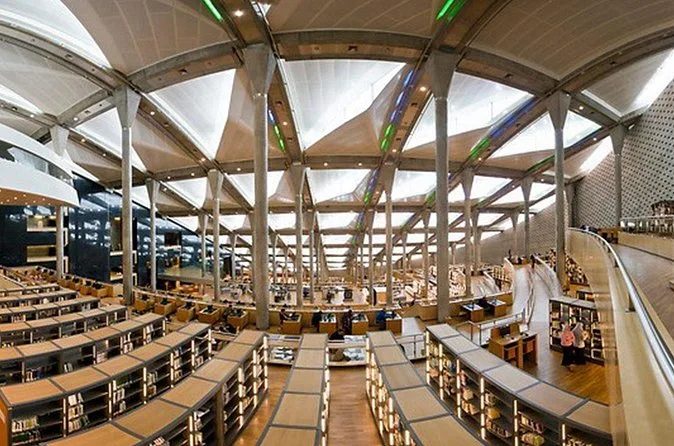
Standing along the waterfront Corniche, the modern Bibliotheca Alexandrina is an architectural and cultural revival of the ancient Library of Alexandria, which once served as the intellectual heart of the Hellenistic world.

Design & Symbolism: Completed in 2002 by the Norwegian architectural firm Snøhetta, the library is shaped as a massive 160-meter tilted disc of grey Aswan granite, angled toward the sea to symbolize the sun rising out of the Mediterranean to illuminate knowledge. The exterior curved walls are hand-carved with characters, scripts, and alphabets from over 120 historical writing systems.

The Main Reading Room: A cascading, 11-tier open reading hall sheltered beneath an angled glass roof with specialized panels designed to filter natural sunlight without damaging rare manuscripts.

On-Site Museums: Beyond its millions of volumes, the complex contains four specialized museums: the Antiquities Museum (housing Greco-Roman, Pharaonic, and sunken harbor artifacts), the Manuscripts Museum, the Sadat Museum, and the History of Science Museum.

Catacombs of Kom El Shoqafa

Catacombs of Kom El Shoqafa: The Subterranean Roman Necropolis

Discovered accidentally in 1900 when a donkey slipped through the bedrock, the Catacombs of Kom El Shoqafa ("Mound of Shards") form the largest and most complex Roman-period burial network ever found in Egypt.

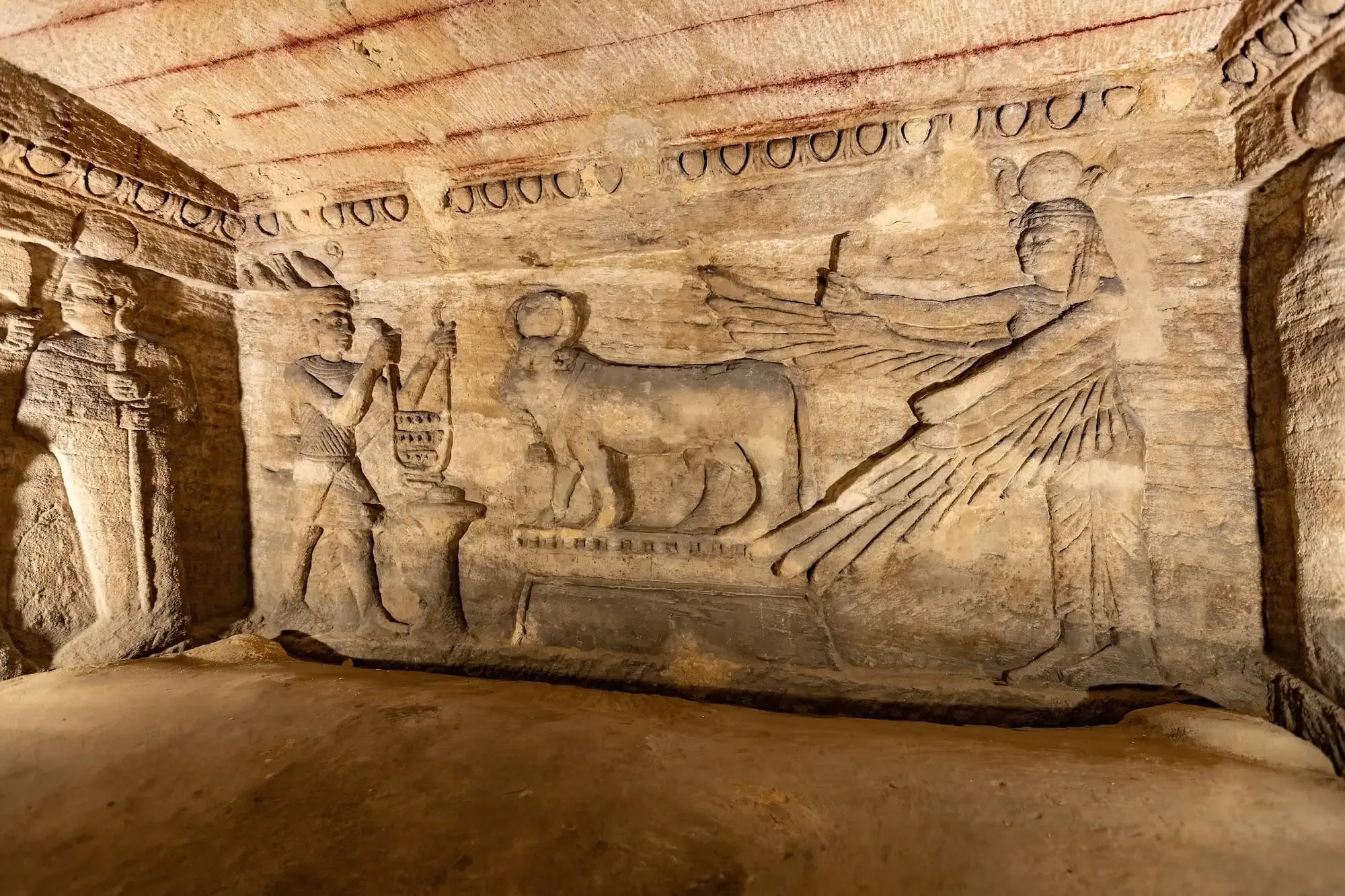
Fusion of Three Cultures: Carved across the 2nd century CE, the necropolis is celebrated for blending ancient Egyptian, Greek, and Roman artistic canons in a single funerary complex.

The Architecture: The site descends three full subterranean tiers into the solid limestone table, connected by a central spiral staircase built with wide, gentle steps to facilitate carrying deceased bodies downward:

The Rotunda: A circular central shaft used to lower bodies by ropes.

The Triclinium: A rock-cut dining chamber where relatives gathered to eat memorial banquets in honor of the deceased on stone couches.

The Main Tomb Chamber: Features reliefs of Roman soldiers alongside the jackal-headed god Anubis depicted wearing Roman armor and carrying a Roman gladius sword, while bearded Agathodaemon serpents stand sentinel under Medusa shields.

Pompey's Pillar

Pompey's Pillar: The Serapeum Acropolis

Dominating a rocky plateau in the Karmouz district, Pompey's Pillar is the only freestanding monolithic classical column remaining upright in ancient Alexandria.

Name vs. Reality: Despite being mistakenly named by Crusaders after the Roman general Pompey, the column was actually erected in 297 CE in honor of the Roman Emperor Diocletian following his quelling of an Alexandrian rebellion.

Megalithic Proportions: Carved from a single solid block of red Aswan pink granite, the shaft stands approximately 20.46 meters high (nearly 27 meters including its base and Corinthian capital) and weighs an estimated 285 metric tons.

The Serapeum Ruins: The pillar stands at the elevated center of the ancient Serapeum, the grand sanctuary dedicated to Serapis, the patron deity of Alexandria. Beneath the surface lie subterranean tunnels, galleries, and niche walls that once served as the daughter branch of the Great Library.

The Citadel of Qaitbay: A 15th-century maritime fortress built upon the ruins and stones of the ancient Pharos Lighthouse.

Bibliotheca Alexandrina: The modern disc-shaped architectural marvel reviving the ancient Great Library, featuring four on-site museums and an 11-tier reading room.

Catacombs of Kom El Shoqafa: The largest Roman subterranean necropolis in Egypt, famous for blending Pharaonic, Greek, and Roman artistic styles.

Pompey's Pillar & The Serapeum: A colossal 27-meter red granite monolithic column standing amid the ruins of the ancient sanctuary of Serapis.

Montaza Palace & Gardens: A 150-acre seaside estate featuring Ottoman and Florentine royal architecture and lush coastal gardens.

Roman Amphitheatre (Kom El-Dikka): The only excavated Roman theater in Egypt, featuring well-preserved marble seating, mosaics, and Roman bathhouse ruins.

By Private Car / Tour Van: Takes approximately 2.5 to 3 hours each way via the Cairo–Alexandria Desert Road.

The catacombs represent a fusion of ancient Egyptian, Greek, and Roman religions and art found nowhere else in Egypt. Within its multi-level subterranean chambers, traditional Pharaonic deities are depicted in classical Roman military dress—such as the jackal-headed god Anubis outfitted in a Roman soldier's tunic, breastplate, and sword.

Qaitbay Citadel: Daily from 09:00 AM to 05:00 PM.

Catacombs of Kom El Shoqafa: Daily from 09:00 AM to 04:00 PM.

Pompey’s Pillar: Daily from 09:00 AM to 04:00 PM.

Bibliotheca Alexandrina: Sunday through Thursday from 10:00 AM to 07:00 PM, Saturday from 10:00 AM to 02:00 PM (Closed on Fridays).